
 Vaulted ceilings and wall-to-wall windows are glorious, until you try to have a conversation or stay warm.
Alpine Light: Getting Window Placement Right in a High-Altitude Home
Light behaves differently in the mountains. At altitude, there is less atmosphere to soften it, so sun arrives brighter and harsher than it does at sea level. Winter sun sits low and rakes across the landscape for hours, while summer sun climbs high and floods rooms from above. Snow reflects light back up into spaces that would otherwise be shadowed. All of this is wonderful — and all of it will surprise you if you design windows the way you would for a house in a leafy suburb.
The first thing to understand is that orientation is not a preference, it is a set of consequences. South-facing glass collects warmth all day, which is a gift in January and a liability in July. West-facing glass takes the full force of low afternoon sun, which is beautiful and also the single most common cause of overheated, glare-filled mountain living rooms. East glass gives you cold, clear morning light and a fast warm-up. North glass is steady, cool, and forgiving — the easiest light to live with, and the one most people underuse.
Managing Glare and Heat Without Losing the View
The reflex is to solve glare with blinds, but blinds defeat the point of a mountain window. A better approach is to design the glare out before it exists. Deep roof overhangs on the south side block high summer sun while letting low winter sun in — a passive strategy that works with no moving parts. On the west, a covered porch, a vertical fin, or a strategically placed tree does the same job. Exterior shading is far more effective than interior shades, because it stops the heat before it enters the glass.
Glass technology matters enormously at altitude. A high-performance coating that reduces solar heat gain is worth specifying on west and south exposures, and triple glazing earns its cost in cold, windy locations where a single pane becomes a cold radiator. Pay attention to the frame as well: thermally broken frames reduce condensation, which is the enemy of a mountain window in February.
Then there is the question of height. Floor-to-ceiling glass frames a view spectacularly, but it also puts a large, cold surface at ankle level, exactly where people sit. A common and comfortable compromise is to run glazing from a low sill up to a header, keeping the coldest part of the glass above knee height, and to place seating so people face the view rather than press against the glass.
Framing the View Like a Composition
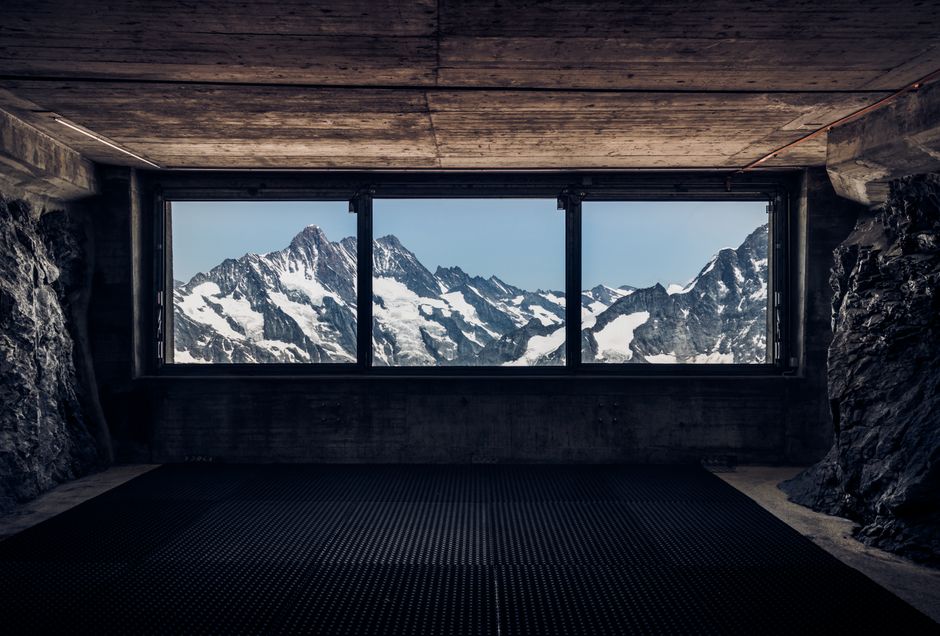
A window is not just an opening; it is a frame, and the mountain outside is the picture. Think about what each window actually shows. A wide horizontal window suits a sweeping valley or a ridgeline. A tall vertical window suits a single peak or a stand of aspens. A corner window removes the post that would otherwise cut the view in half and is often the most memorable detail in a mountain house.
Consider the seasons too. A window that frames a summer meadow may look out on a snowbank for five months. That is not a problem — snow is beautiful — but it means you should design the interior so the view holds interest in every season, and design the window so it stays clear of frost and condensation. Operable windows near the ceiling help move hot air out in summer and let you clear the room quickly after cooking.
Get the glazing right and the mountain becomes part of the house. Get it wrong and you spend your evenings closing curtains on the very thing you bought the property for.