
 The best mountain houses are designed by the land itself, long before an architect ever puts pencil to paper.
Designing for Deep Snow: Roofs, Entries, and the Details That Save Your Winter
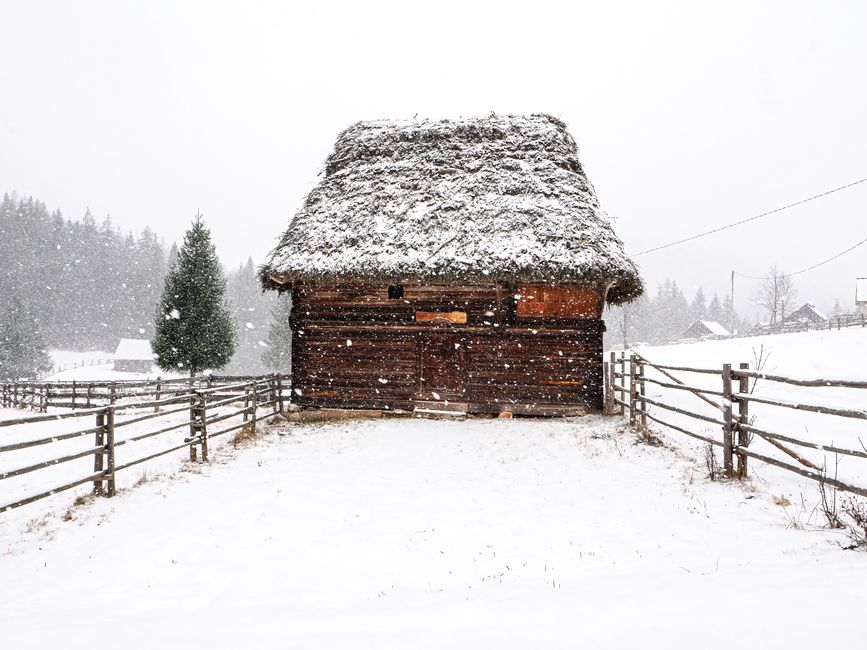
Anyone who has spent a winter at elevation knows that snow is not a decorative dusting. It is a load, a force, a moving weight that will find every weakness in a design. A house that photographs beautifully in August can become a daily battle by February if the architect did not take snow seriously. The good news is that designing for deep snow does not mean compromising beauty. It means letting the realities of winter shape the plan from the start.
The first consideration is the roof. Steep pitches shed snow, but they also dump it in a hurry, which means you need to think about where it lands. Above a door, a driveway, or a walkway, a shedding roof is a hazard. That is why so many mountain homes pair a steep main roof with smaller, protective roofs over entries and porches, or use snow guards and breaks to keep the slide controlled. A metal roof with a standing seam is the mountain standard for good reason: it sheds cleanly, lasts for decades, and does not rot or grow moss the way some other surfaces will.
The Entry as a Winter Room
If there is one place mountain homes most often get wrong, it is the entry. A single door opening straight into the living space is a recipe for tracked-in slush, cold drafts, and a permanent pile of wet gear. The better move is a sequence: an outdoor covered porch, then a mudroom or boot room with durable floors, benches, hooks, and a place for wet jackets to drip, and only then the warm interior. In a serious snow climate, this transition zone is not a luxury. It is the difference between a house that works and one that fights you all season.
Give the mudroom real square footage and real storage. Built-in cubbies, a floor drain, and a boot dryer station feel indulgent until the first big storm, when they become the most-used corner of the house.
Details That Earn Their Keep
Beyond the big moves, small decisions add up. Heated driveways and walkways, while an investment, spare you hours of shoveling and reduce slip hazards. Deep roof overhangs protect walls and windows from wind-driven snow and keep entries dry. Windows are best kept clear of the snowslide zone, or protected by a roof above. Exterior materials should be chosen to handle freeze-thaw cycles without cracking or staining.
Orientation matters in winter too. A garage or entry placed to block prevailing wind makes arriving home far more pleasant, and a south-facing window can turn a snowy afternoon into free solar warmth. None of these choices are glamorous, but they are the ones you will appreciate most when the drifts pile high. Design for the worst week of the year, and the rest of the seasons take care of themselves.