
 A smaller mountain home can feel generous if you spend your square footage on views, light, and the rooms you actually use.
The Case for a Winter-Ready Outdoor Room: Fireplaces, Heaters, and Shelter at Altitude
Most mountain homes have a deck. Far fewer have an outdoor room — a covered, sheltered, genuinely usable space that works in October and March as well as it does in July. The difference is not decoration. It is a set of architectural decisions about cover, wind, heat, and access, and it changes how a house is used for the better part of the year.
The starting point is cover. An uncovered deck in the mountains is a fair-weather amenity at best; the sun is intense, afternoon storms roll through, and snow sits on it until spring. A roof — whether an extension of the main house or a separate structure — transforms the space. It keeps rain and snow off, cuts the harsh midday sun, and gives you a place to put lighting and heat. If you are building new, extending the main roof over the outdoor area is usually cheaper and better looking than adding a separate cover later.
Blocking Wind Is Half the Battle
In the mountains, wind often matters more than temperature. A sheltered forty-degree evening is comfortable; a windy fifty-degree evening is not. So the design question is not only "how do we heat this space" but "how do we stop the wind from stealing that heat." Partial walls, a solid railing, a screen, or even a strategically placed planter can break the prevailing wind. Watch your site across several seasons if you can, or ask a neighbor which direction the weather usually comes from. A single wall on the windward side can make an outdoor room usable weeks earlier in spring and later in fall.
Orientation matters too. An outdoor room facing west gets glorious evening light but also the worst of the afternoon sun and heat. Facing south gives you the most usable warmth and light in the shoulder seasons. Facing north is cool and shaded — pleasant in August, chilly in October. Most mountain homes land on a south or southwest orientation for the outdoor room, with shading to tame the summer.
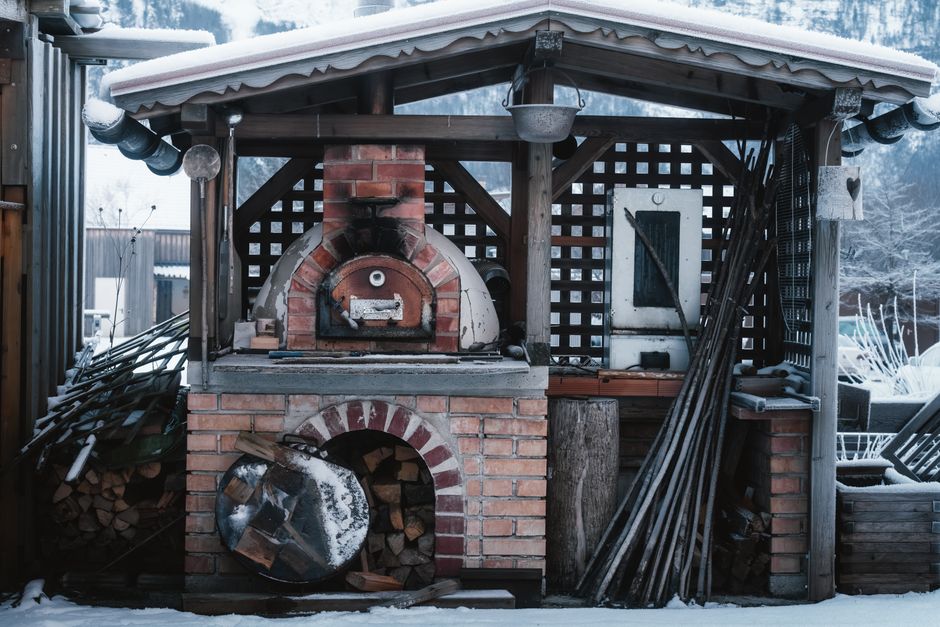
Then there is heat. A wood-burning outdoor fireplace is the classic answer and remains the most atmospheric, though it requires a proper chimney, clearance from combustibles, and a place to store dry wood. Gas fireplaces start with a switch, which matters more than you might think on a cold evening when nobody wants to build a fire. Infrared patio heaters are efficient and directional but visually utilitarian. Many good outdoor rooms combine two of these: a fireplace for gathering and mood, plus a heater for the shoulder seasons when you want warmth without a fire.
Details That Make It a Room, Not a Deck
Flooring sets the tone. A surface that is level with the interior and continuous with it — stone, tile, or a durable composite — reads as an extension of the house and is easier to clear of snow. Steps down to a lower deck break that continuity and make the space feel like a separate destination.
Lighting should be warm and low. Overhead lights make an outdoor space feel like a parking lot; a mix of wall sconces, string lights, and a fire does the opposite. Add a ceiling fan to move air on hot days and push warm air down on cool ones.
Finally, keep it close to the kitchen. An outdoor room that requires a long walk to refill a glass gets used half as often as one adjacent to the main living area. Put it where the house already gathers, give it cover and a windbreak, and it will become the room you use most — even when there is snow on the ground beyond it.